Atmospheric River Season: How Central Valley Homes Flood and How to Get Ahead of It
Every few winters the Valley gets a reminder that we live in a floodplain with a thin margin. Atmospheric rivers stack up off the Pacific, the Delta rises, storm drains max out, and the calls start: garages under water in Lathrop, crawl spaces flooded in Lodi, ceiling stains spreading in Modesto. The pattern repeats because the causes repeat.
This is the guide to read in summer, when there is still time to act on it.
How Valley homes actually take on water
Storm flooding here rarely looks like a levee failure. The common failure modes are smaller and closer to home:
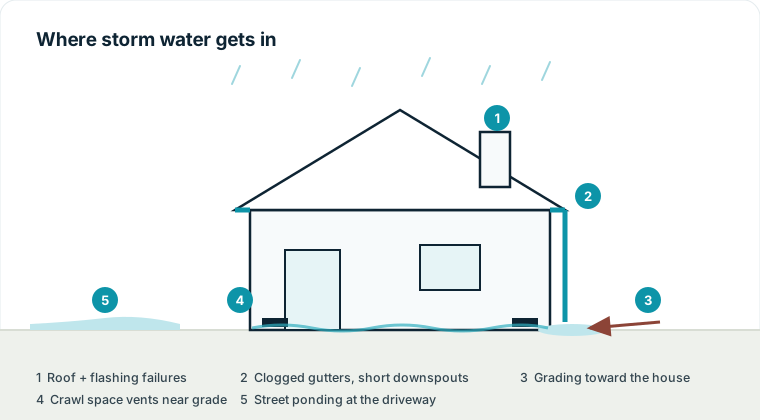
Overwhelmed street drainage. Stockton’s older neighborhoods drain slowly by design and slower in practice when leaves clog the grates. Water ponds at the curb, rises over the driveway lip, and finds the garage. Homes near Smith Canal and the Calaveras River corridor see this first.
Crawl space intrusion. Much of the older housing stock north and east of downtown Stockton sits on raised foundations. Saturated soil pushes water through vents and gaps, and it sits under the house for weeks, wicking into subfloor and framing. Most owners find out when the floors cup or the smell arrives.
Roof and flashing failures. The first big storm of the season is a roof inspection you did not schedule. Valley heat cooks roofing all summer, then the first heavy rain finds every cracked boot and lifted shingle at once.
Gutter and downspout dumping. Downspouts that discharge at the foundation load the soil right where you least want it. This is the cheapest fix on this list and the most commonly skipped.
Sump and drainage pump failures. The pump that has not run since March is asked to run for 72 hours straight in December. Power blinks mid-storm and the pit fills.
Neighborhood risk notes
- Stockton: anywhere adjacent to Smith Canal, the Miracle Mile area’s older raised foundation homes, and low pockets off March Lane. Weston Ranch drains slowly in sustained rain.
- Lodi: the east side near the Mokelumne carries river-adjacent groundwater rise on top of drainage issues.
- Manteca and Lathrop: newer slab construction handles crawl space risk but the flat grading means street ponding, and River Islands residents should know their levee district’s alert system.
- Tracy: hard soil sheds water fast, so short intense bursts pond quicker than long soaks.
The pre-season checklist that matters
Do these in October, before the first system arrives:
- Walk the roofline after the first light rain. Ceiling stains show up in the attic before the drywall. Ten minutes with a flashlight beats a January discovery.
- Clear gutters and extend downspouts at least four feet from the foundation. Splash blocks minimum, extensions better.
- Test the sump pump by pouring a bucket of water in the pit. If it is more than seven years old, price a replacement now, not during the storm when every hardware store is sold out.
- Check crawl space vents and grading. Soil should slope away from the house. Vents should sit above the level water reaches during hard rain.
- Photograph everything. Walk the house with your phone: rooms, flooring, the water heater, the crawl space if you can. If you ever file a claim, before photos are the difference between a smooth payout and an argument.
- Know your shutoffs. Storm season is also power-outage and pipe-stress season. Everyone in the house should know where the main water shutoff is.
If water gets in anyway
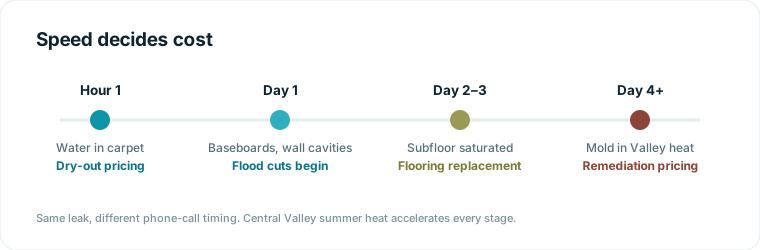
Speed decides cost. The difference between a $2,000 dry-out and a $10,000 remediation is usually measured in days of delay. Our first hour guide covers the immediate steps, and the cost guide covers what you are looking at financially.
The one storm-specific rule: do not wait for the rain to stop to make the call. Crews book out fast when a system parks over the Valley, and the queue is first come, first dried.
Water in the house, storm still overhead, call (209) 980-AQUA. Dispatch answers 24/7, storm or not.