Emergency Water Extraction: What to Expect
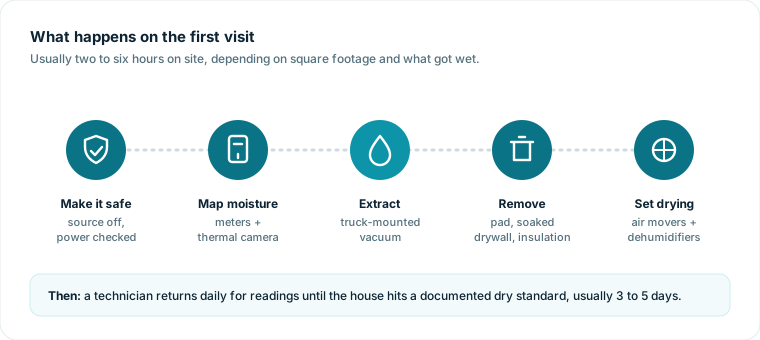
If you have just called for emergency water extraction, you probably want to know what the next few hours look like. Here it is plainly: a crew arrives, makes the space safe, measures where the water went, vacuums it out with a truck-mounted unit, removes anything that cannot be dried, and sets drying equipment. The first visit usually takes 2 to 6 hours. Drying continues for days after.
Before the crew arrives
You can do a lot to speed things up in the meantime, safely:
- Shut off the water at the nearest valve, or the main if you cannot find the source. The shutoff guide shows where all four usually are.
- Kill power at the breaker to any room with water near outlets or cords. Do not wade into standing water with live circuits nearby.
- Move what you can off the wet floor: electronics, documents, rugs, and anything on wooden legs.
- Take photos and video of everything before it moves. Your claim will lean on them.
- Skip the shop vac marathon if the water is from a toilet, sewer line, or outside flooding. That is contaminated water, and the sewage cleanup guide explains why.
Our longer first hour checklist covers the rest.
Step 1: Make it safe
The crew confirms the source is stopped, checks for electrical hazards, and looks for anything structural, like a sagging ceiling holding water. In a sewage or flood loss, this is also when protective equipment goes on.
Step 2: Inspect and map the moisture
Before any vacuum starts, a technician walks the loss with a moisture meter and a thermal camera. This matters more than it seems. Water runs under walls, into cabinets, and along subfloor to rooms that look completely dry. The moisture map sets the boundaries of the job, and it becomes the first page of your insurance documentation.
Step 3: Extract the water
This is the loud part. A truck-mounted extraction unit sits in the driveway with hoses run inside. It pulls far more water, far faster, than any rental or shop vac, and on carpet, crews often use weighted extraction tools that squeeze water out of the pad underneath.
Extraction is the highest-value hour of the whole job. Every gallon pulled out as liquid is a gallon the dehumidifiers never have to evaporate, which is days off the drying time. It is also the single biggest reason 24 hour water damage restoration is worth calling in the middle of the night rather than in the morning.
Step 4: Remove what cannot be dried
Some materials hold water too well to dry in place in time. What comes out depends mostly on where the water came from.
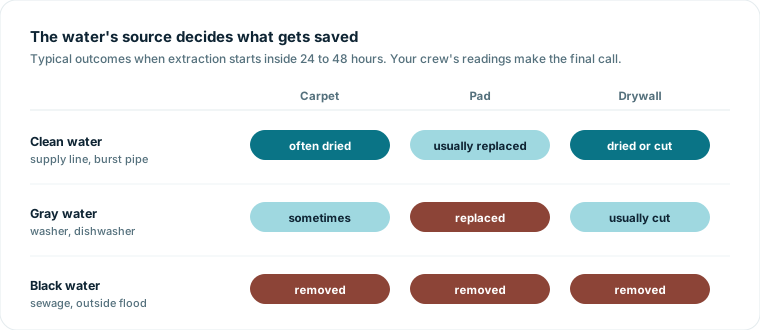
- Carpet pad is cheap and acts like a sponge, so it is usually replaced even when the carpet above it can be saved.
- Drywall often gets a flood cut, removing the bottom 1 to 2 feet so the wall cavity can dry. With clean water caught fast, it can sometimes be dried in place.
- Insulation that got soaked comes out. Wet insulation does not dry in a wall.
- Anything touched by sewage or floodwater that is porous, like carpet, pad, drywall, and upholstered furniture, is removed. There is a detailed breakdown in the guide on water categories and what gets tossed.
A good crew explains each removal with a reading, and photographs everything before it leaves the house.
Step 5: Set drying equipment
The visit ends with air movers placed along wet walls and floors, and dehumidifiers to pull the evaporated moisture out of the air. Crawl spaces, hardwood, and wall cavities sometimes get specialty setups. This equipment runs 24 hours a day, and yes, it is loud. Please leave it on. Turning it off at night stops the drying.
After the first visit
A technician comes back daily to take readings, adjust equipment, and log progress. Once materials reach a documented dry standard, usually in 3 to 5 days, the equipment comes out. Then the rebuild begins. If you want to know how the two phases differ, read water mitigation vs restoration, and for the full calendar see how long water damage restoration takes.
Common questions
How fast will a crew get here? Across Stockton, Modesto, Lodi, Tracy, Manteca, and nearby cities, local crews can usually be rolling within the hour, day or night.
How long does emergency water extraction take? The extraction itself is often 1 to 3 hours for a typical home loss. The entire first visit, including inspection, removal, and equipment setup, is usually 2 to 6 hours.
How much does emergency water extraction cost? It depends on square footage, water category, and what has to be removed. Most homeowners policies cover sudden losses like burst pipes, and the extraction is often billed to the claim. The cost guide has real ranges.
Do I need to be home? Someone needs to let the crew in and sign the work authorization. After setup, you do not have to be there for every daily check, as long as the crew can get access.
Can I stay in the house? Usually, for a clean-water loss confined to a few rooms. For sewage, large losses, or if anyone in the home is medically vulnerable, the crew may recommend staying elsewhere during drying.
Water on the floor right now?
Stop reading and call. Dispatch answers 24/7 and sends a licensed local crew for emergency water removal anywhere in San Joaquin and Stanislaus Counties.