Water Mitigation vs Restoration: What's the Difference?
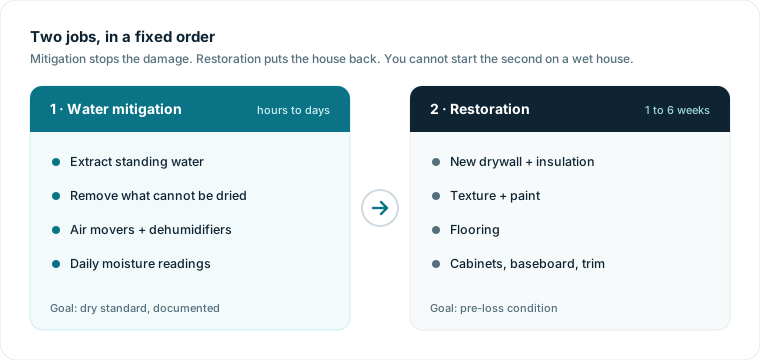
The two words get used as if they mean the same thing, and on an invoice they absolutely do not. Water mitigation is the emergency work that stops the damage from getting worse. Water damage restoration is the repair work that puts the house back. Mitigation happens first, over hours and days. Restoration comes after, over weeks. Your insurer treats them as separate line items, and often as separate contractors.
What water mitigation includes
Mitigation is everything that happens between “there is water on the floor” and “the structure is verified dry.” In practice that means:
- Stopping the source if it is still running, and making the space safe to work in.
- Emergency water extraction. Truck-mounted vacuums pull standing water out of carpet, pad, and subfloor. This is the single highest-leverage hour of the whole job. More on that in the guide to what happens during emergency water extraction.
- Moisture mapping with meters and a thermal camera, because water travels well past where you can see it.
- Controlled removal of materials that cannot be dried in place: carpet pad, soaked insulation, and usually a flood cut along the bottom of the drywall.
- Structural drying with air movers and dehumidifiers running around the clock.
- Daily readings and a drying log, until materials hit a documented dry standard.
That usually runs 3 to 5 days. The full timeline breakdown covers what stretches it.
What water damage restoration includes
Restoration is the rebuild. Once the house is dry, somebody has to replace what came out:
- Drywall and insulation, then tape, texture, and paint
- Flooring: carpet and pad, laminate, tile, or refinished hardwood
- Baseboards, trim, and door casings
- Cabinets, if the boxes swelled or the toe kicks wicked water
- Any electrical or plumbing repairs the loss exposed
This part runs 1 to 6 weeks depending on scope, material lead times, and how quickly the claim gets approved. It is ordinary construction, and in California it needs a licensed contractor.
Why the order is not negotiable
You cannot restore a wet house. Drywall hung over a damp stud cavity traps the moisture that was still leaving, and that is how a covered water loss turns into an uncovered mold problem six months later. Any crew offering to “just put new drywall up” before readings confirm the framing is dry is skipping the step that protects you.
This is also why the speed of mitigation drives the size of the restoration bill.
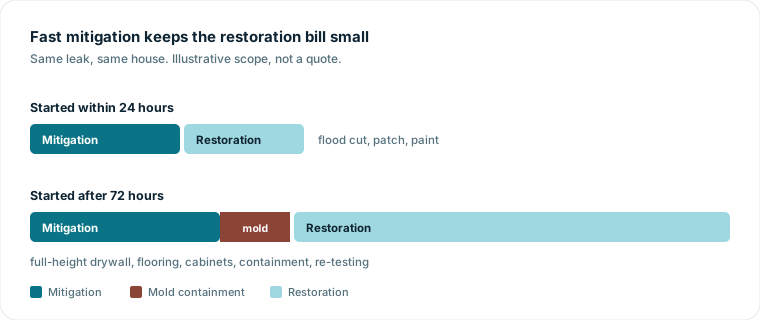
A leak extracted and dried on day one usually means a two-foot flood cut, some patching, and paint. The same leak left over a long weekend often means full-height drywall, new flooring, swollen cabinets, and mold containment on top. Nothing about the water changed. The clock did.
What each one costs
Rough ranges for a typical single-room to multi-room loss in the Central Valley:
- Mitigation: often $1,500 to $5,000 for a clean-water loss, higher for sewage or large areas. It is billed on equipment days, labor, and materials removed.
- Restoration: anywhere from a few thousand dollars for patch and paint to $20,000 or more when floors and cabinets are involved.
The Stockton water damage cost guide goes line by line.
How insurance handles mitigation and restoration
Most homeowners policies include a duty to take reasonable steps to prevent further damage. Mitigation is how you meet it, and insurers generally expect it to start right away, before an adjuster ever visits. Waiting for permission is one of the most common ways people hurt their own claim.
Restoration usually waits on an adjuster’s approval of the scope. The drying logs, moisture readings, and photos from mitigation are what support that scope, so the paperwork from the first few days matters as much as the work. Details on coverage are in the guide to what homeowners insurance covers in California, and a dispatcher can connect you with insurance claim help.
Do you need one company or two?
Either works. Some water mitigation companies only do the emergency phase and hand off to a general contractor. Others do both. Things worth knowing:
- One company for both means one point of contact and no argument about who caused what. Make sure they hold a California contractor license for the rebuild.
- Two companies can make sense if you already have a contractor you trust. Ask the mitigation crew to share their full drying log with whoever rebuilds.
- You choose. Your insurer can suggest a preferred vendor, but it is your house and your decision who works on it.
There is a longer checklist in how to choose a water damage restoration company.
Quick answers
Is water mitigation the same as water removal? Water removal, or extraction, is the first step of mitigation. Mitigation also covers drying, demolition, and monitoring.
Can I skip mitigation and just dry it with fans? For a small spill on tile, yes. For anything that soaked into carpet pad, drywall, or subfloor, box fans move air but do not pull moisture out of it, and they cannot tell you when the cavity is actually dry.
How soon should water mitigation start? Within hours. Mold can begin in about 48 hours, and everything that gets wet after the first day raises the restoration bill.
The short version
Mitigation is the emergency. Restoration is the repair. Get the first one moving today, and the second one stays small. Dispatch answers 24/7 for emergency water removal across Stockton, Modesto, Lodi, Tracy, Manteca, Turlock, and the rest of the 209.